CRS 600, Blog 3
Chapter one of Data Feminism (D’Ignazio & Klein, 2020) considers how “power unfolds in and around data” (p. 26). D’Ignazio & Klein focus largely on data science, but I think their work translates quite clearly to quantitative social science. They encourage us to question the purpose of data: Who gets to work with data? Who does it help? Who does it harm?
I’ve thought about this a lot in my academic journey, as my perspective on what data is and what data does changes and evolves and twists and turns. I’ve wondered how I can be a quantitative social scientist and still keep my identity as a critical scholar. I’ve wondered if I can claim to be a post-positivist when I regularly question the value of boiling a phenomenon down to whether it is (statistically) significant or not. Does accepting the null hypothesis mean nothing is happening? That very people aren’t impacted by very real problems? Of course not. But in suggesting that a phenomenon is not statistically significant, accepting the null perhaps also suggests that that phenomenon is not societally significant.
Am I a scientist?
No. Science is not for me.
Then who is science for?
Science is for people who don’t think critically, like I do. Science is for people who want facts. Science is for people who are not comfortable with not knowing, for people who must know.
But aren’t I curious? Don’t I feel I must know?
Yes, but in a different way. I don’t want data. I want experiences.
What are data if not experiences?
Data are numbers. They are quantitative amounts. They dilute the experience, the phenomenon, to a value lacking context.
I’m not sure they do.
Well, anyway, I could never be a scientist. I’m not capable of that. It’s not how my brain works.
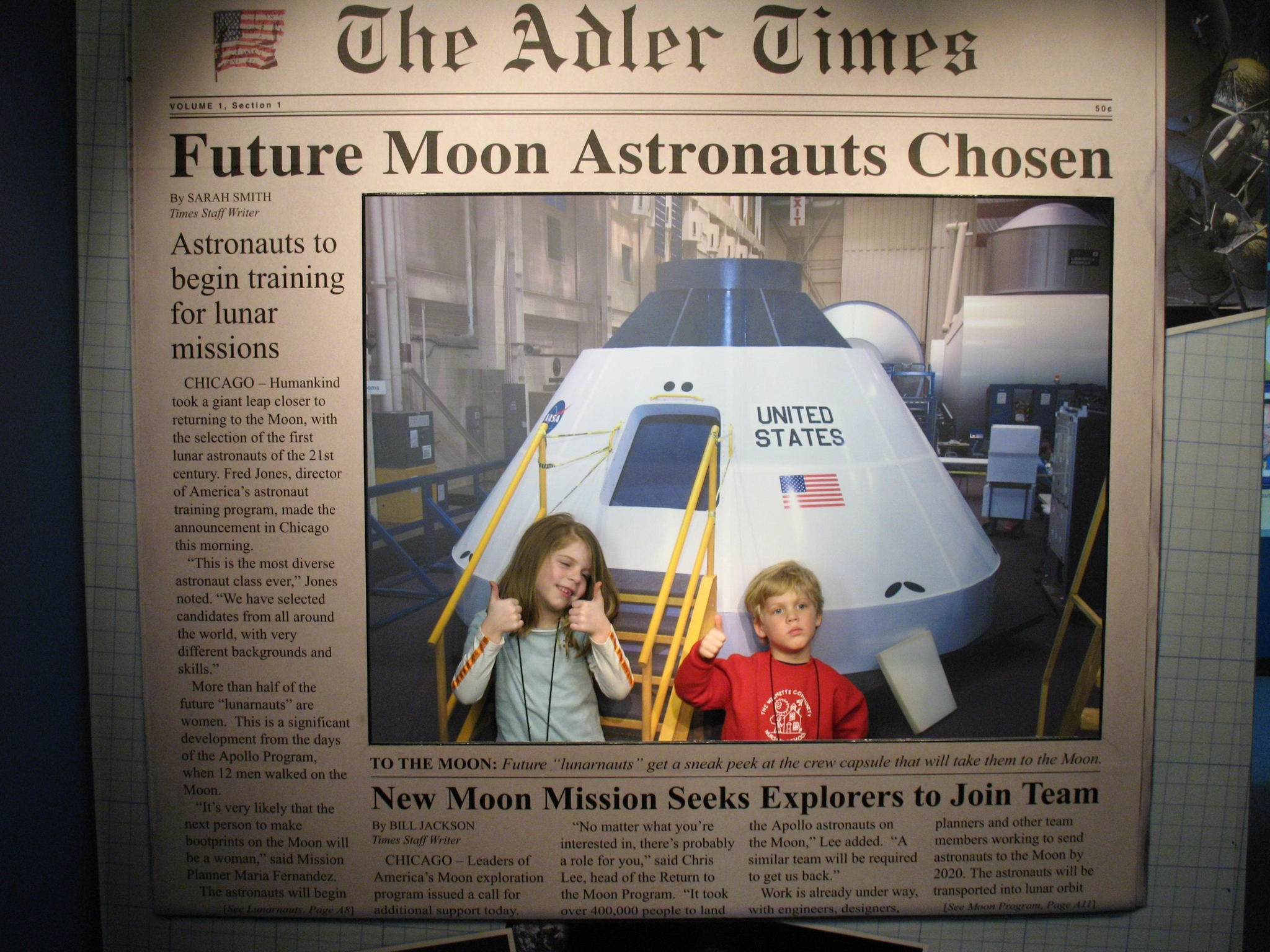
Is that what she would think?
I thought for a long time that I would be a scientist of some sort. At first, I thought I’d be a paleontologist. I’d go to the Chicago Field Museum and search for fossils in the sand. Then maybe an astronaut, when I went to the Adler Planetarium and walked through the planets. For the longest time of all, though, I knew I’d be a geneticist. From the second I learned Punnett squares in middle school, they captivated me. I was good at math and biology, and I got by (sort of…) in the other sciences. Freshman year of college, I declared a biology major.
Fall 2018
Child Growth and Development: A
General Chemistry I: B-
General Chemistry Lab I: B+
Literature Core: A
Calculus I: A
The Courage to Know: A
D’Ignazio and Klein explain the danger of data teams being composed of people from dominant groups, leading to those groups exerting a disproportionate influence on decision-making with data. They call this the privilege hazard (p. 29). What I find most interesting about the privilege hazard is that it’s something many quantitative social scientists would inevitably take issue with: an overrepresentation, data and findings that can’t be generalized beyond a hyper-specific population, and thus is inherently flawed.
This is where I think data feminism may already be at play in much quantitative social science that relies on data—and by data here, I mean numbers that we can run statistics on, not qualitative data. I would argue both are data, and I think that can get lost in Data Feminism chapter 1, but that’s neither here nor there at the moment—in that it has the goal of generalizing to everyone. That goal, to me, aligns with the tenets of examining power that chapter 1 emphasizes. The problem is, that when we generalize, often we’re “generalizing” to a population that wasn’t so general in the first place, but rather is an extremely privileged one.
Of course, social scientists have long pondered how to combat this issue (see Ceci et al., 2010), and any quantitative methods class worth its salt considers data justice. But why haven’t we gotten there yet?
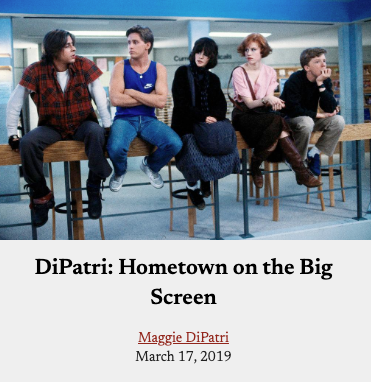
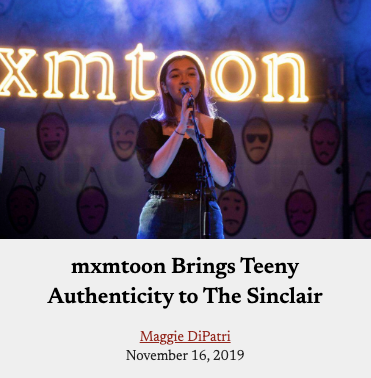
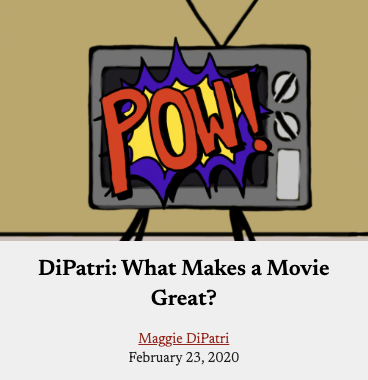
I know, I know. A few grades below an A in one’s first semester of college isn’t crazy. In fact, it’s expected. But I’m me. That B- and B+ haunted me, as did my only other B in college: Financial Accounting, Fall 2019 (I’m not a sadist, it was a prerequisite for another class, okay?!). I’ll be honest, those Bs still haunt me EIGHT years later. At the time, they made me question if I could be a scientist, but then I didn’t really have to question anymore, because I found my passion in communication and media and made the switch.
I wrote about movies, about television, about music. I considered the role of art, of critique. I researched and wrote a thesis. Then I started my career in public media.
What if I measured this as an experiment?
I feel like the numbers would erase the experience of participants.
Can’t it be equally powerful to use numbers to show that something is happening?
Hmmm. Can it?
Remember data feminism?
Yes. But don’t they note that unequal power relations shape how data is used?
Yes. And they also note that “doing good” with data means being attuned to those structures (p. 47). Aren’t you?
I am, I think.
I loved my job, but I felt the pull of academia as strongly as one of those little dogs being yanked by a tight leash. It hurt, and I truly had no choice but to give into the pull. When I arrived for my Media Studies Master’s program, I was terrified (and a little annoyed) that I had to take quantitative research methods. But as more and more research ideas began to populate my POTENTIAL RESEARCH IDEAS document, I noticed that the questions I was asking were perhaps better answered by those same methods that scared me. I realized… I was… what we called in my cohort… a “quant girlie.”
THE HORROR!!! My undergrad rhetorical tradition professor would be ashamed. Probably.
So yes, now I’m in Stats, applying to quantitative-oriented Ph.D. programs, and conducting experiments. At the same time, I wonder daily if I’m sacrificing the critical/cultural background that drew me to Media Studies in the first place, but I think I actually enjoy that tension. It makes me a better scientist. I’m in the WEIRD (Western, Educated, Industrialized, Rich, and Democratic; see Henrich et al., 2010) demographic, and moreover, I’m white. It would be easy for me to ignore data feminism and continue to uphold the hegemonic domain (one of the four domains in the matrix of domination that D’Ignazio and Klein reference, p. 25) through research that privileges those like me.
But that’s not why I came here. I think of the people D’Ignazio and Klein mentioned: The woman in Mexico collecting her own data on femicide, at the cost of her mental health. The youth of Roxbury, who demanded better data to get better air. ProPublica crowd-sourcing to find maternal childbirth data.
The most inspiring to me is the Library of Missing Data Sets. Perhaps learning to use quantitative data is a form of speaking truth to power. Perhaps the folders in the Library don’t need to be empty anymore. Perhaps a new era of scientists, of data feminists, can find that data.
I’ve found a home in the post-positivist paradigm. Or maybe what I’d call a critical post-positivist. The way we come to knowledge will always be flawed. It’s what makes research so fascinating to engage in.
And it’s what makes data feminism so important to consider.
I’m still figuring out who I am as a scholar.
I think that’s okay.
What if I never figure it out?
What if?
I feel unsettled.
Maybe that’s the point.

A future data feminist, crunching some digits (literally and figuratively).
Works Cited
Ceci, S. J., Kahan, D. M., & Braman, D. (2010). The WEIRD are even weirder than you think: Diversifying contexts is as important as diversifying samples. Behavioral and Brain Sciences, 33(2–3), 87–88. doi:10.1017/S0140525X10000063
D’Ignazio, C., & Klein, L. F. (2020). Data feminism. MIT Press.
Henrich, J., Heine, S. J., & Norenzayan, A. (2010). The weirdest people in the world?. Behavioral and Brain Sciences, 33(2–3), 61–135. https://doi.org/10.1017/S0140525X0999152X
