The title says it all, kind of. Kidding! Also, if my attempt at humor is not landing, I’m referencing these t-shirts.
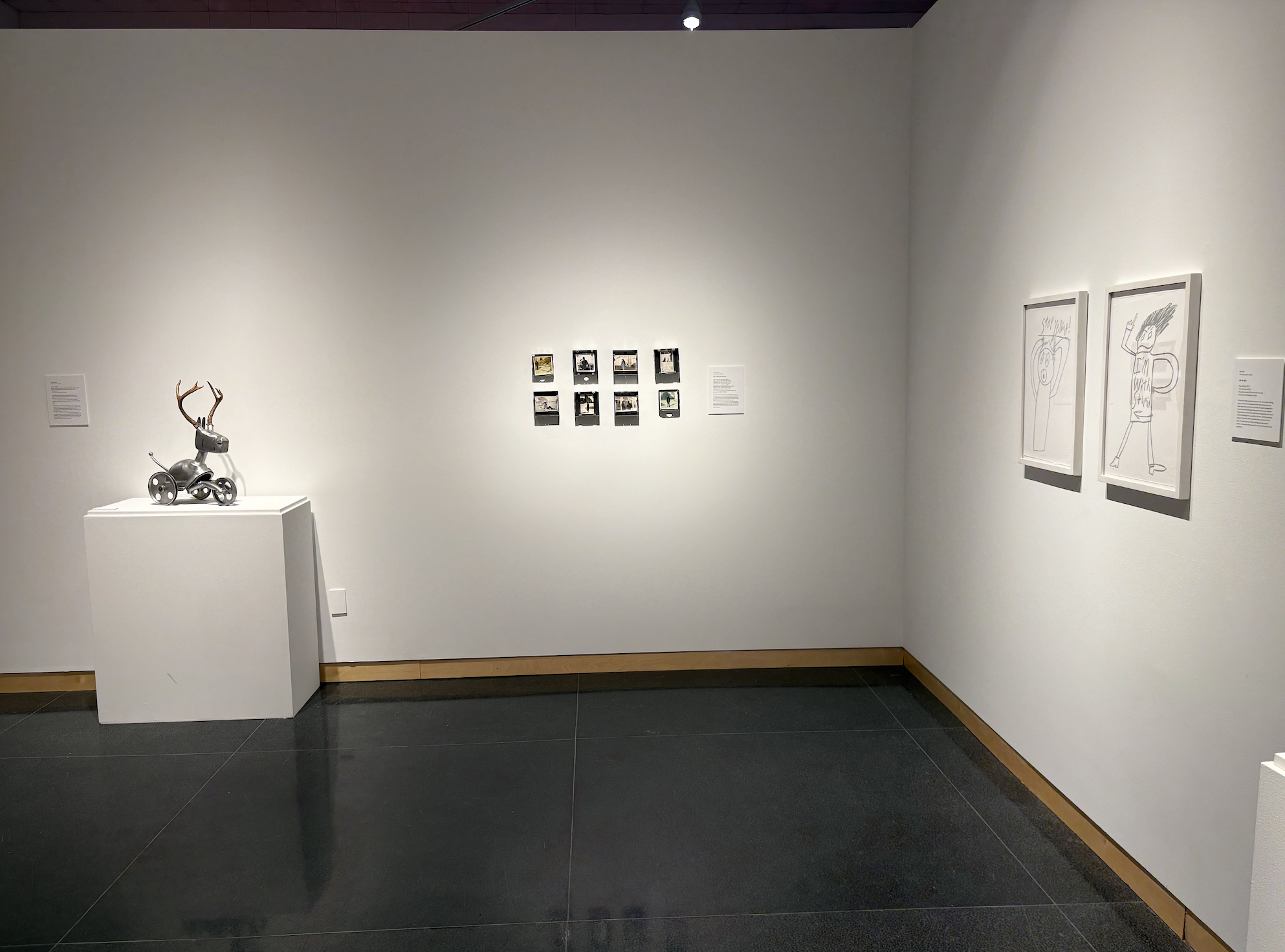
Admittedly, though, I was very moved by my visit to the campus art museum, where I spent my time in the exhibit, Reclaimed: The Art of Recology. The exhibit features work by former artists-in-residence at Recology, San Francisco’s waste management service, that provides artists “unique opportunities to recycle and reclaim discarded waste as reimagined art objects” (quote from exhibit statement, see first paragraph in photo below).
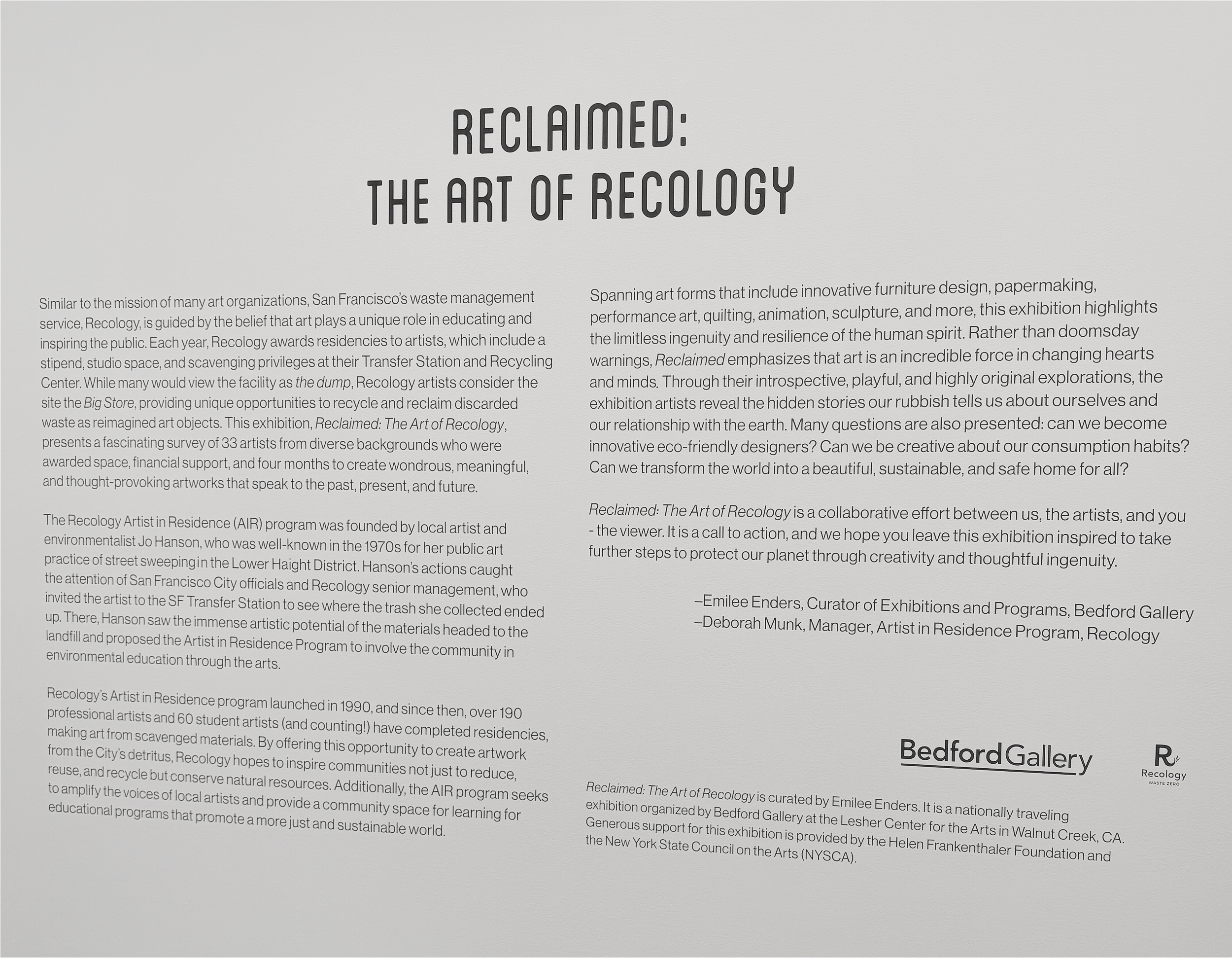
Exhibit statement for Reclaimed: The Art of Recology at the Syracuse University Art Museum. As a side note, I cannot recommend this exhibit enough. Seeing discarded objects turned into such thoughtful art is inherently moving, at least to me. Photo by Maggie DiPatri.
Arriving at the museum, I was immediately struck by how on-the-nose this exhibit was for reflecting on the archive. Initially walking around the pieces, it was hard to choose which one I wanted to focus on. but one piece stuck in my mind, so I knew I had to focus my analysis there.
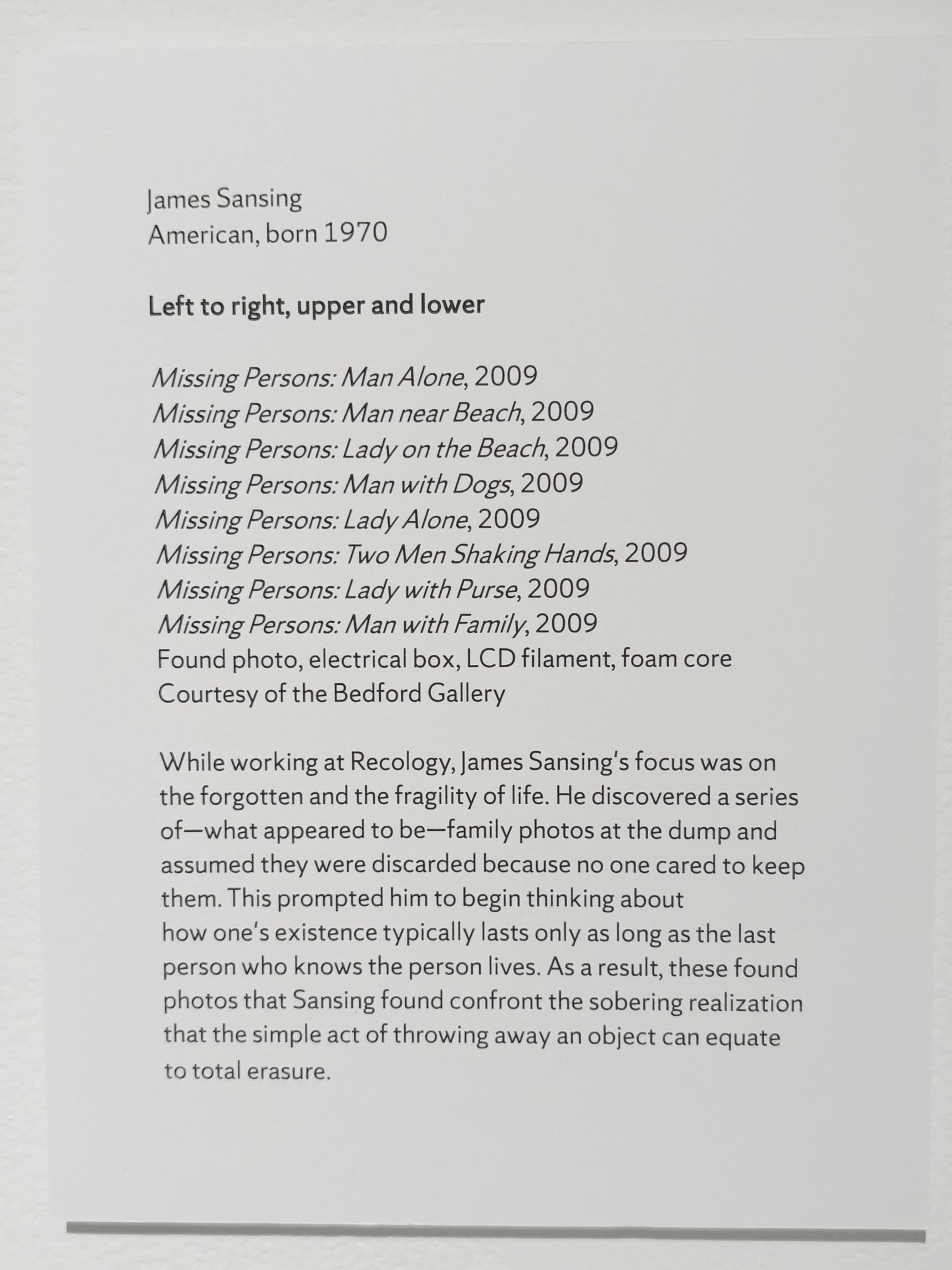
Description of the Missing Persons series, provided by the Syracuse University Art Museum. Photo by Maggie DiPatri.
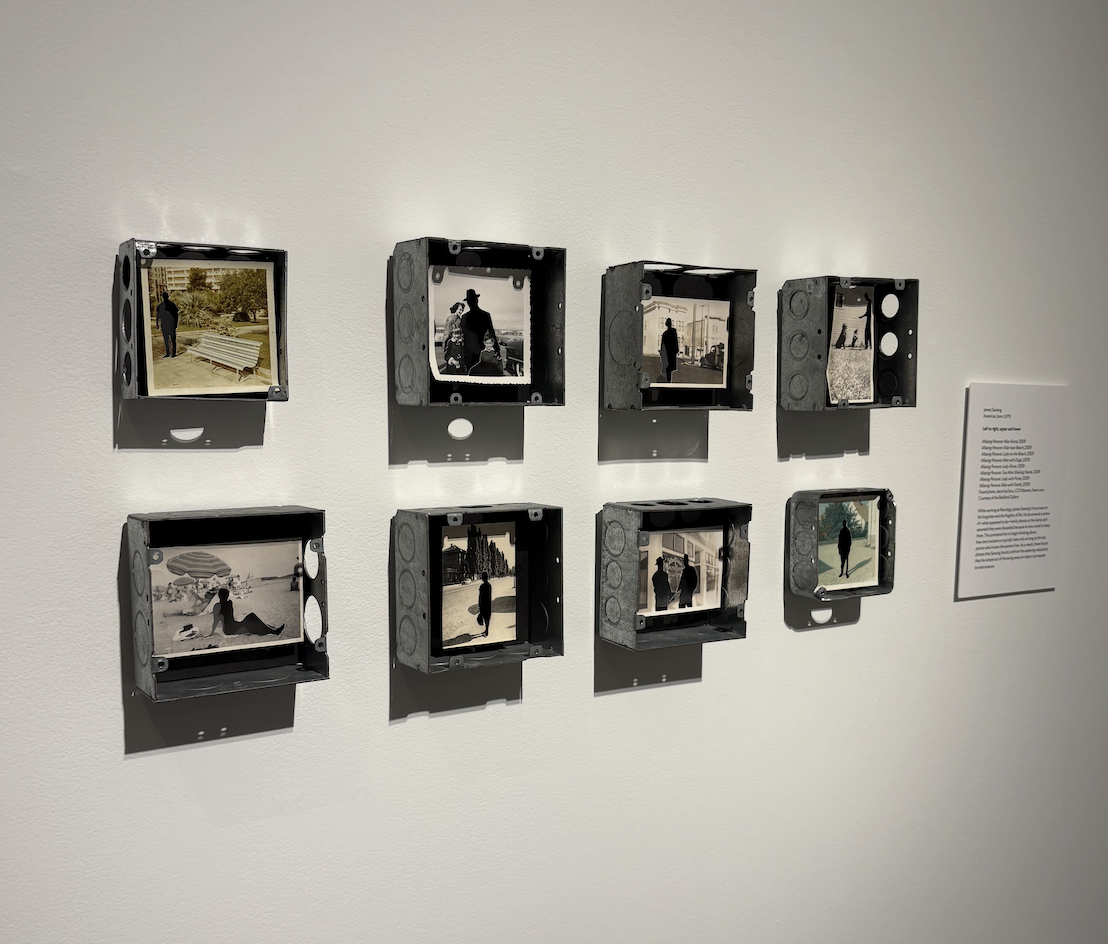
Photo of the Missing Persons series on display at the Syracuse University Art Museum. Photo by Maggie DiPatri.
The piece I chose was a series of photos, each called “Missing Persons,” and the subject of the photo (e.g., “Missing Person: Man with Dogs”). The series consisted of small metal boxes (probably about 3×3 or 4×4 inches each) which were open on one side and had various circular holes in them. Within each box, there was a small photo, with the subject(s) of the photos cut out to reveal the black matte background in the box. The photos look aged. Not only because they were discarded in dump, but because their subjects seem to exist many decades ago. I’m notoriously bad at estimating time, but to me, it seemed the photos probably ranged from the 1950s-1980s. Some were in color, though most were in grayscale or sepia.
I kept coming back to the cutout that (I assume) used to complete a photo of a woman on the beach. I thought about the time I’ve spent with friends and family on the beach, how there’s probably hundreds of pictures of people I love having a beach day with people they love. The image, to me, evoked a lovely memory, that for many is relatable (who doesn’t love a beach day?). I would be so happy to know such a lovely memory was preserved. It’s easy to imagine myself, my friends, my mom, or my grandmother as the woman in this photo.
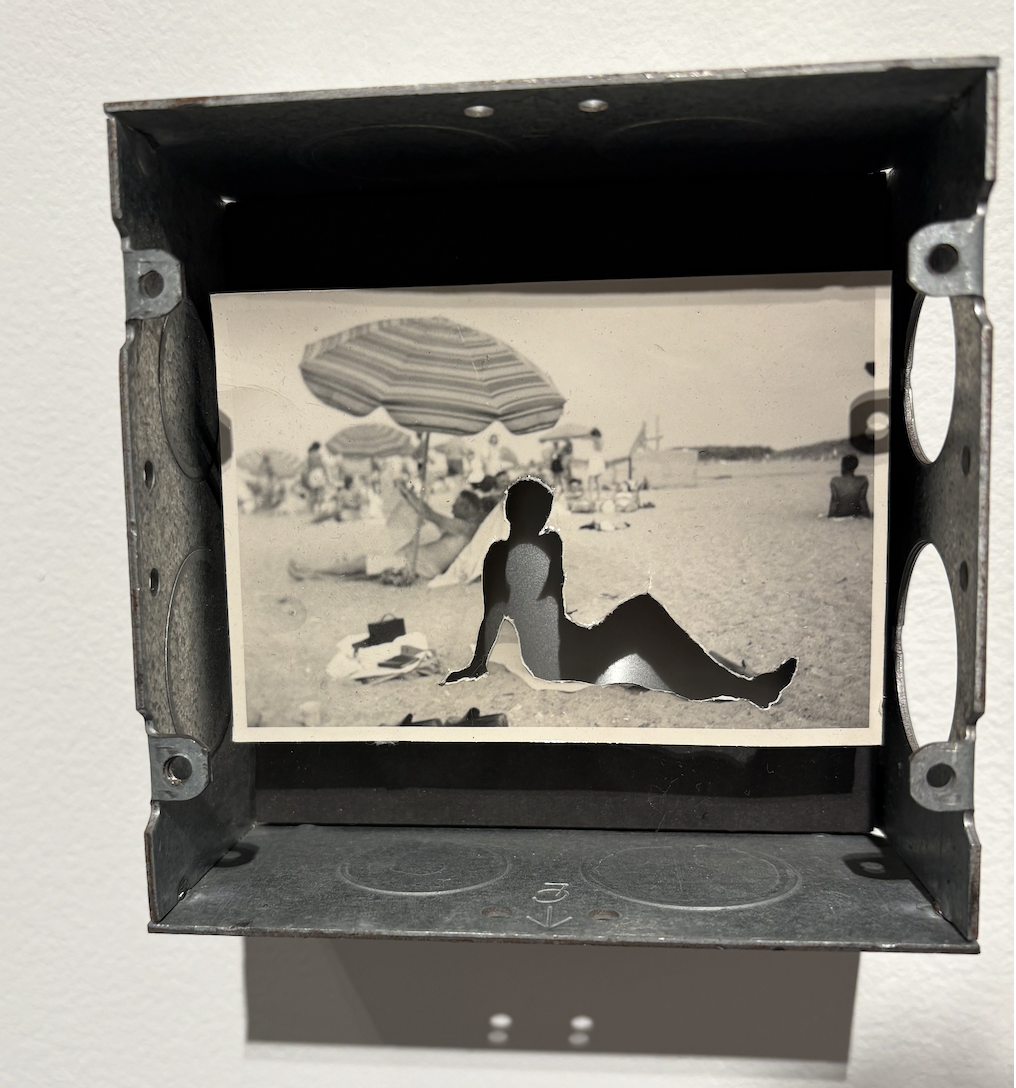
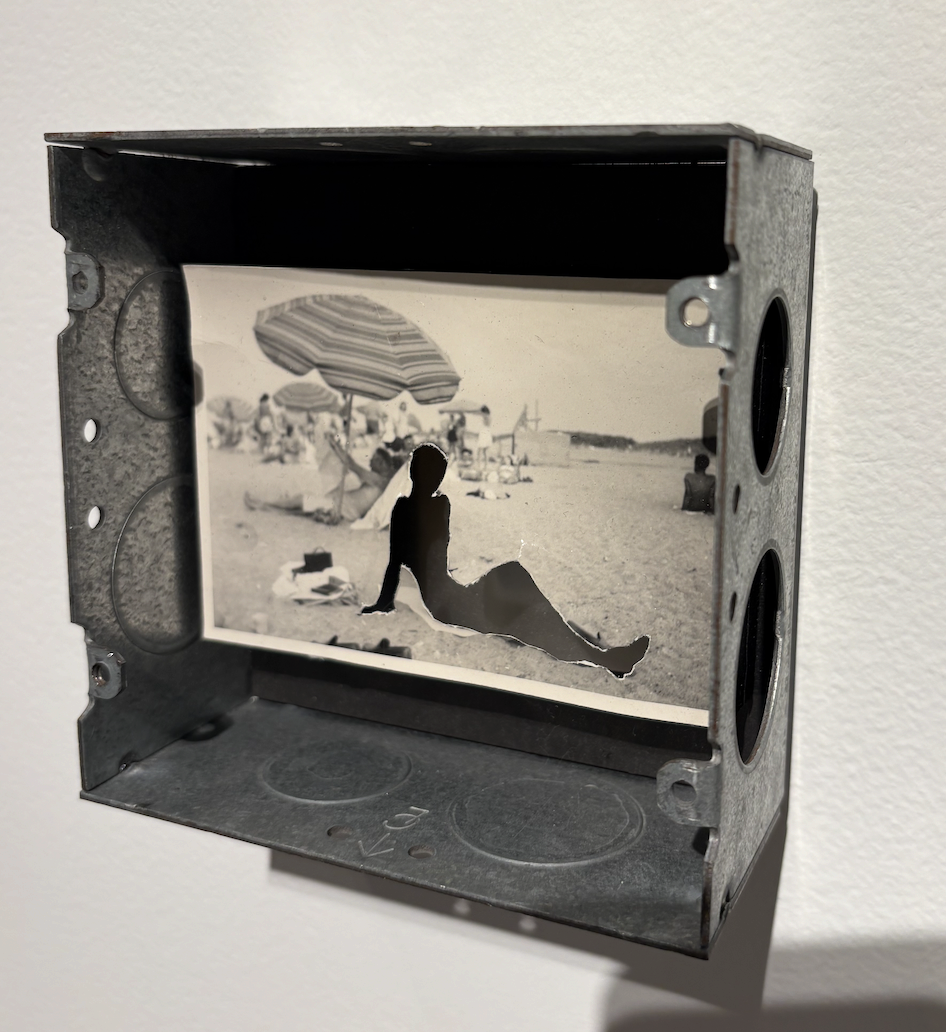
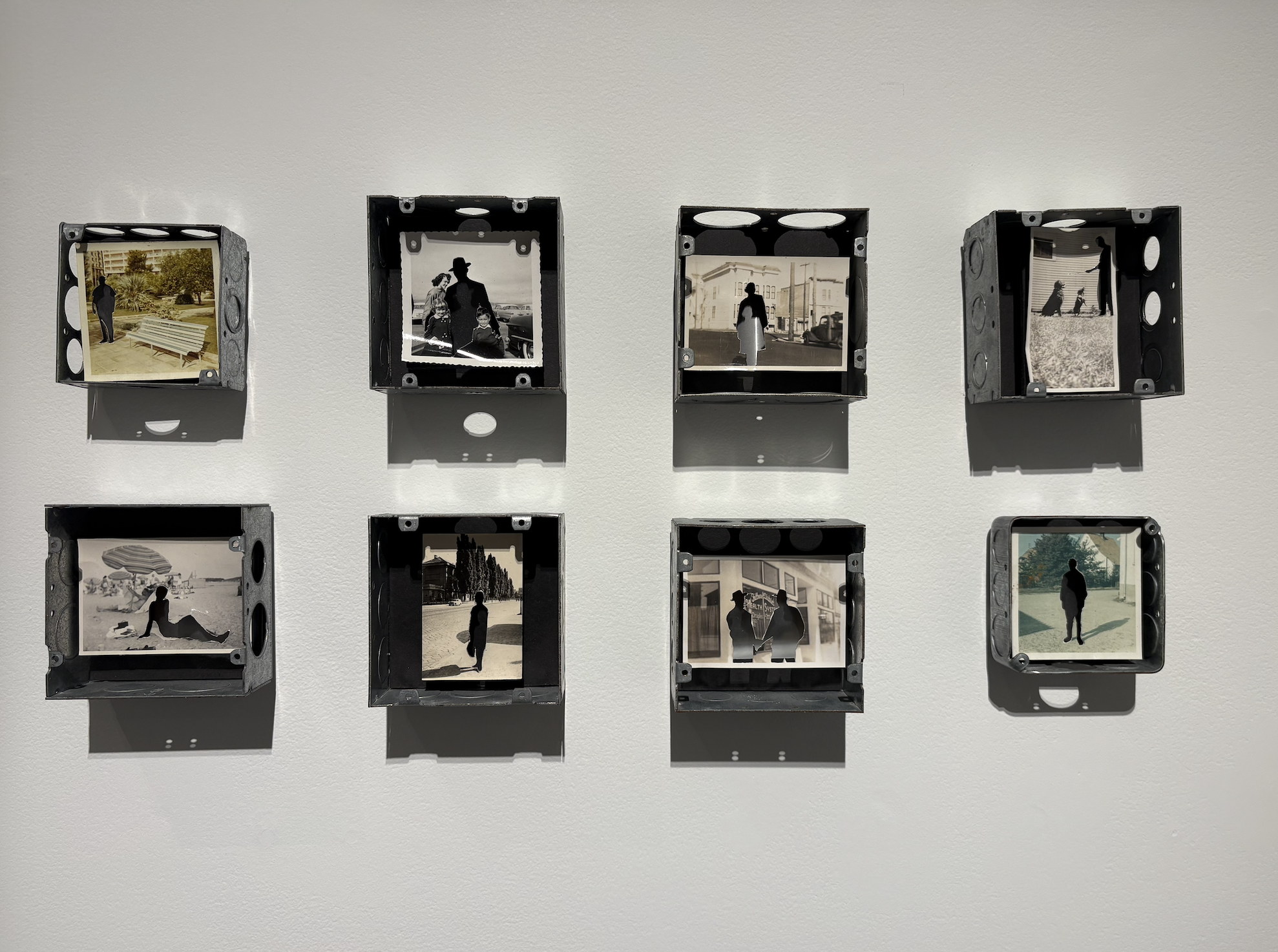
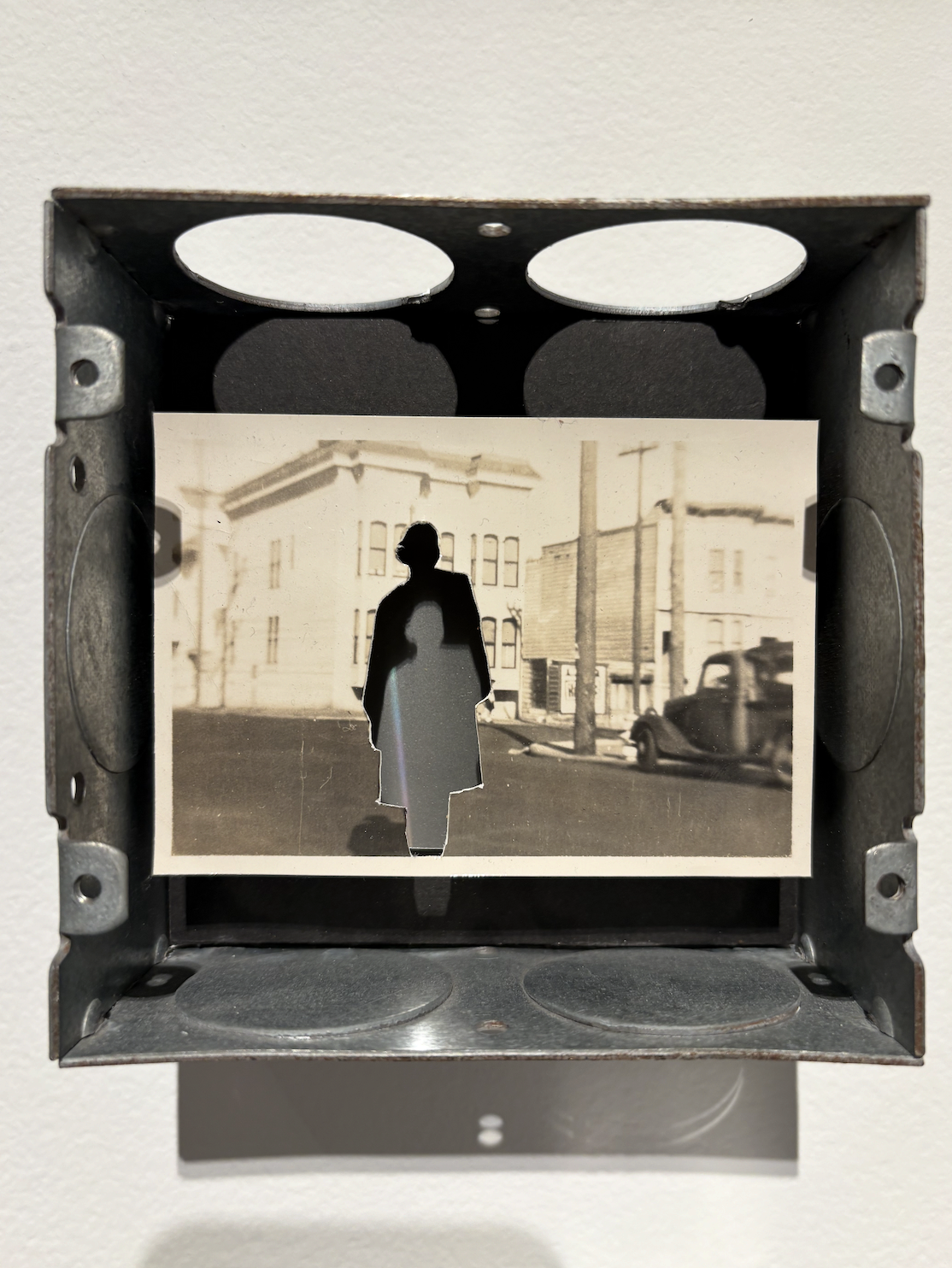
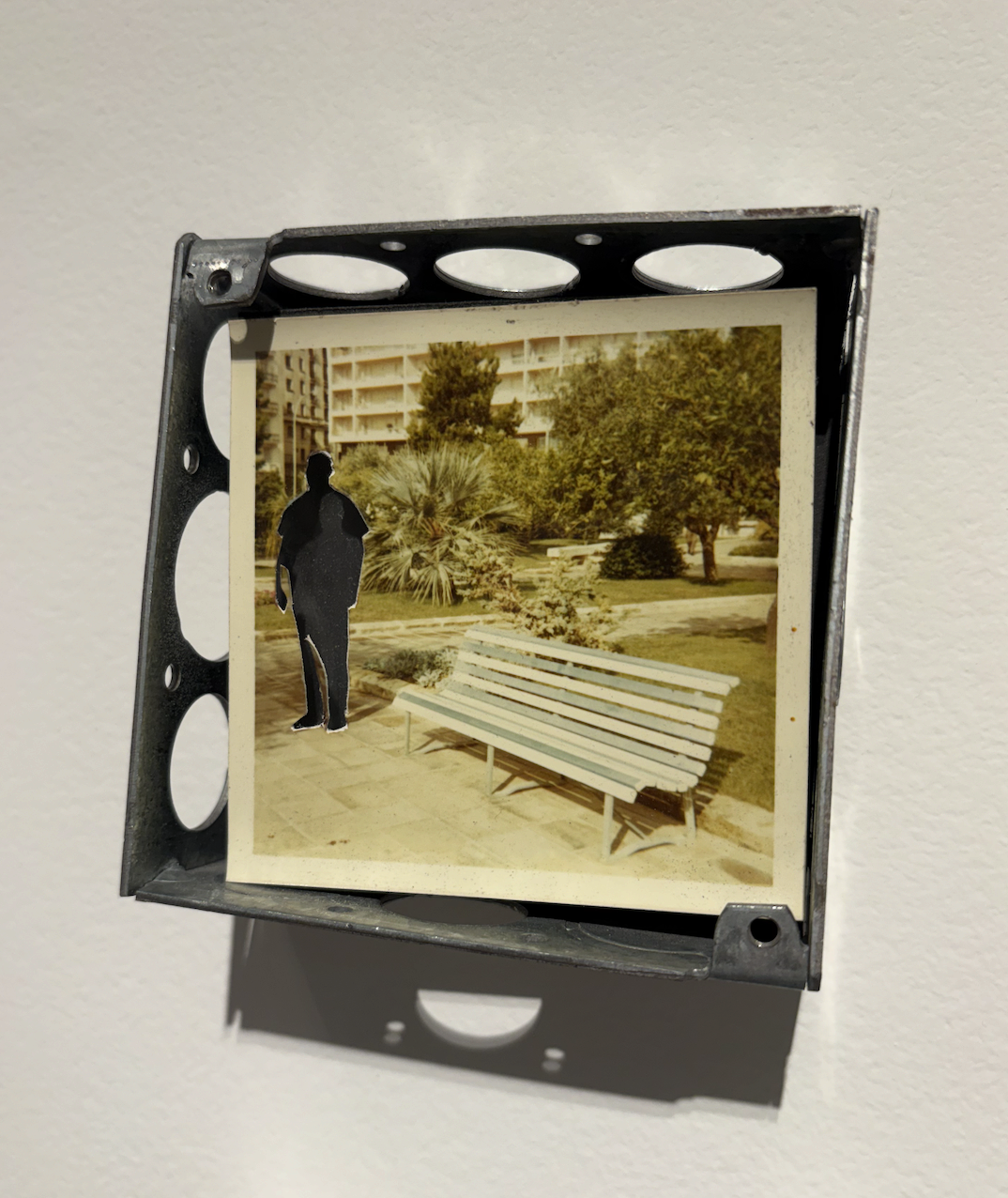
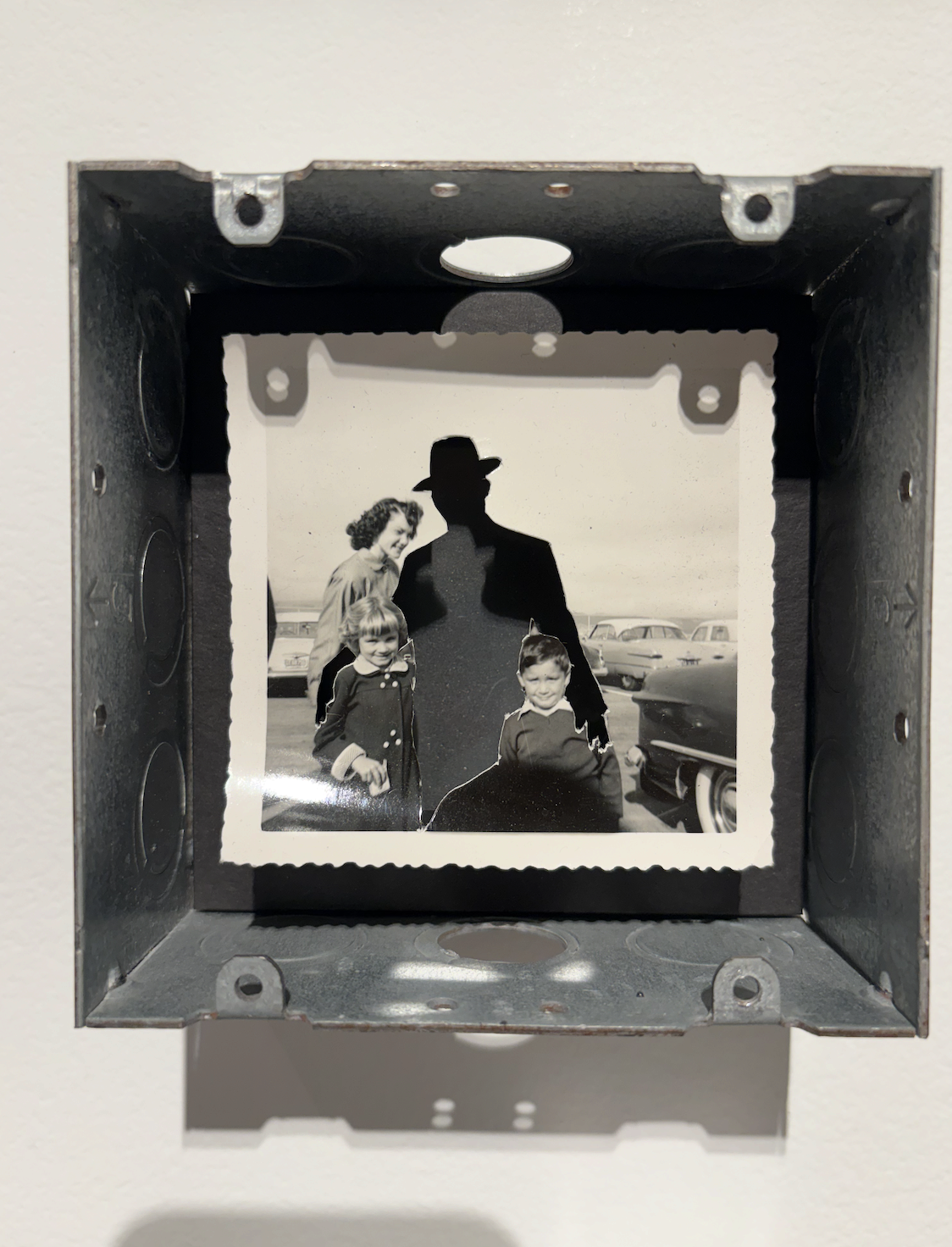
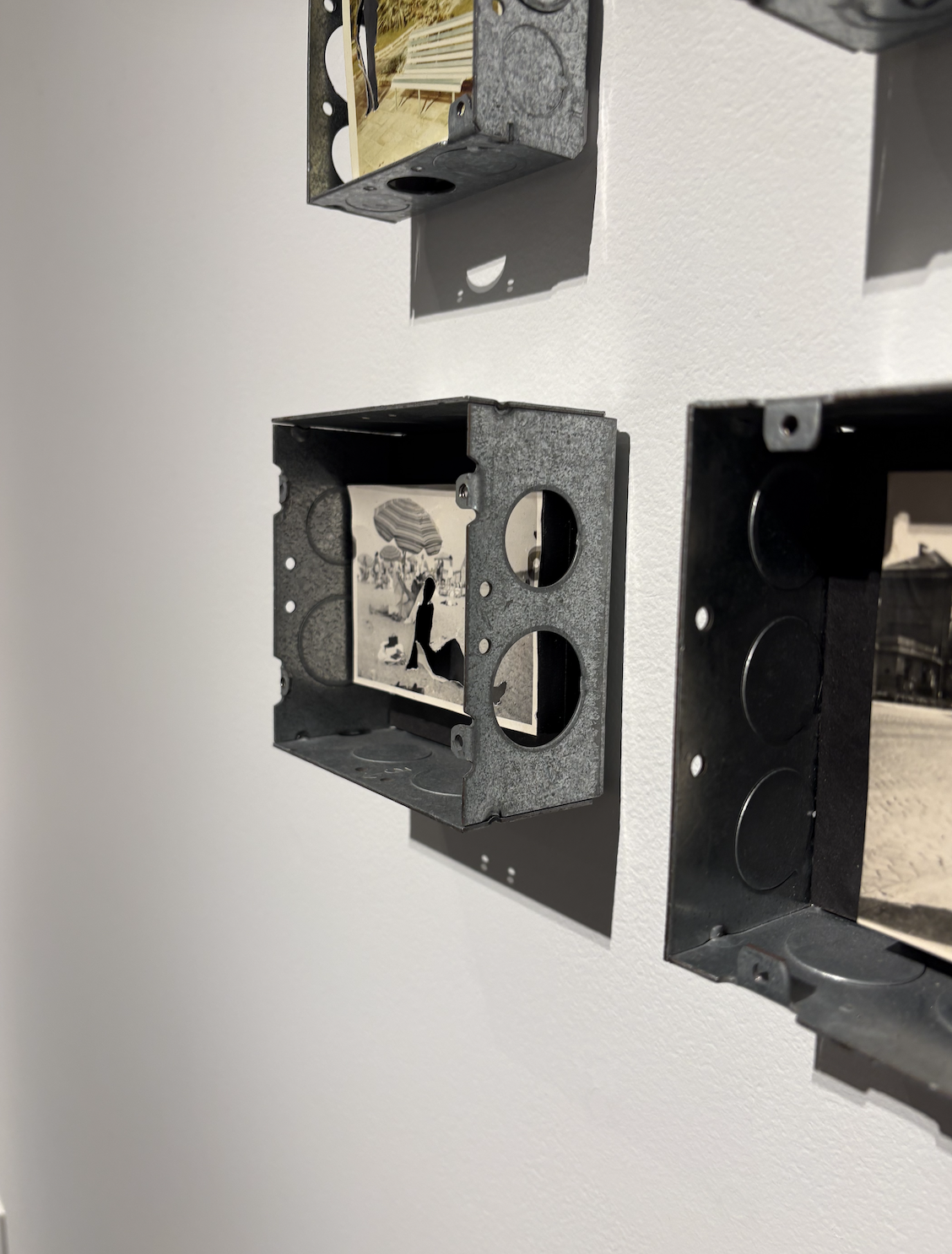
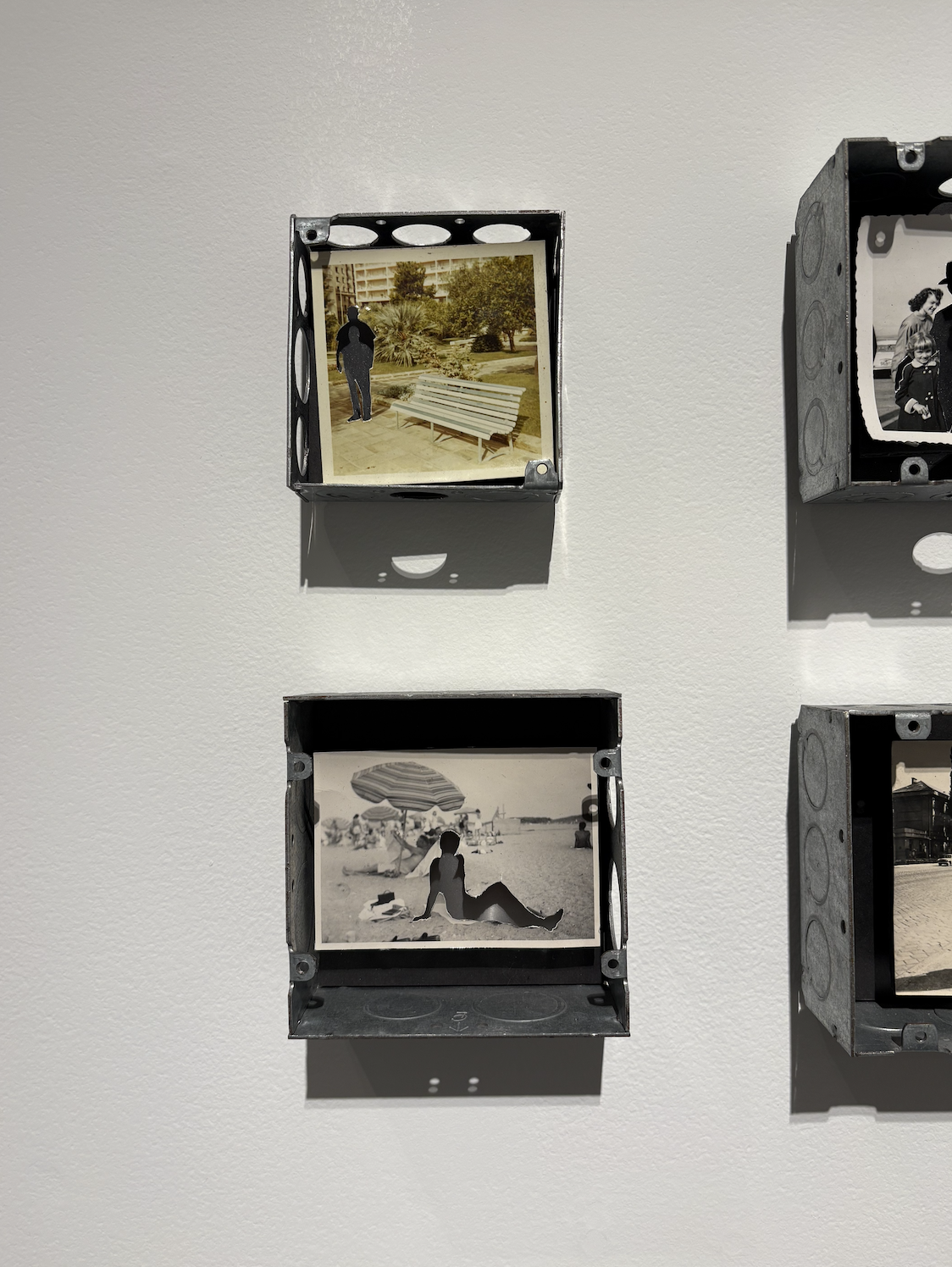
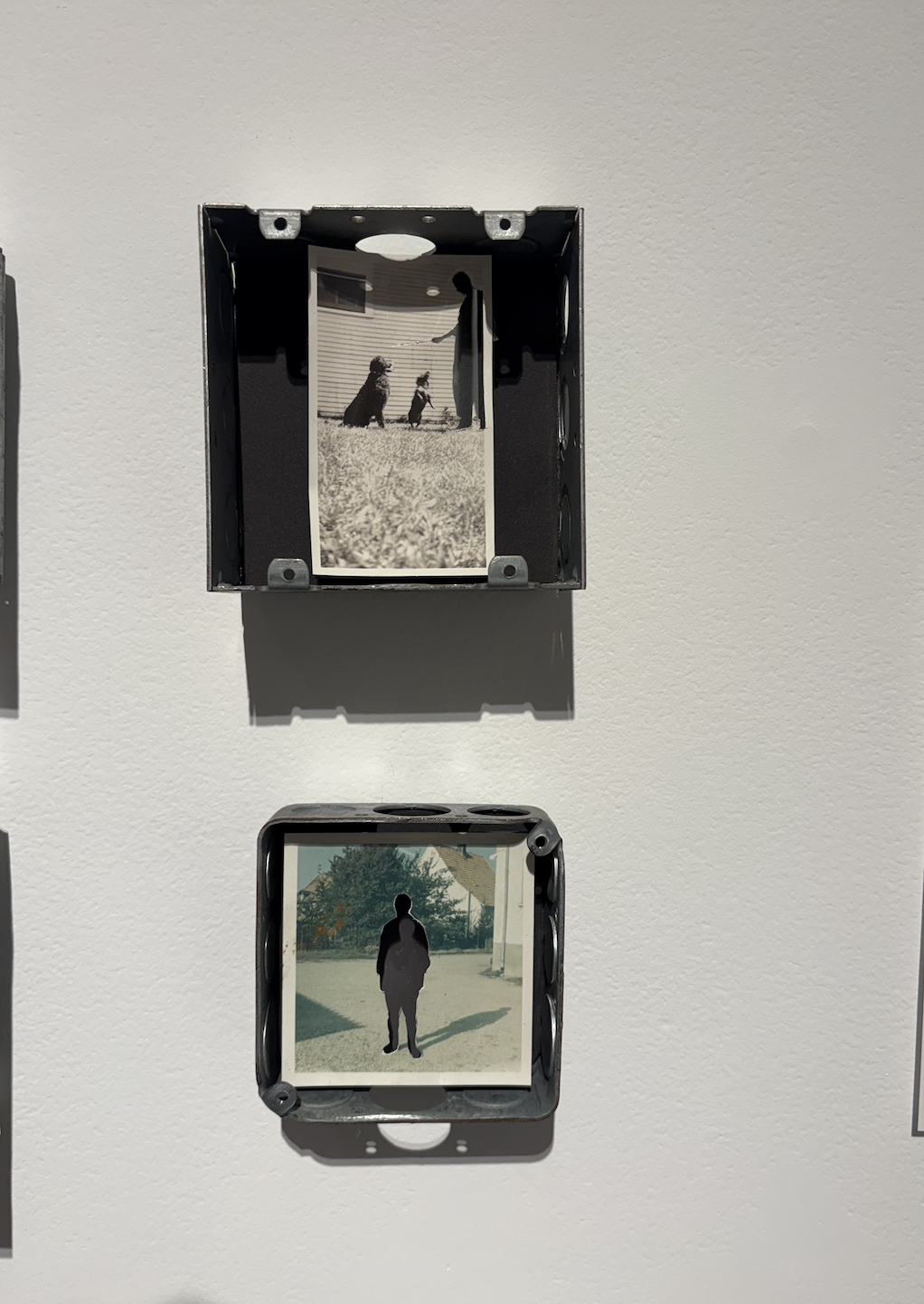
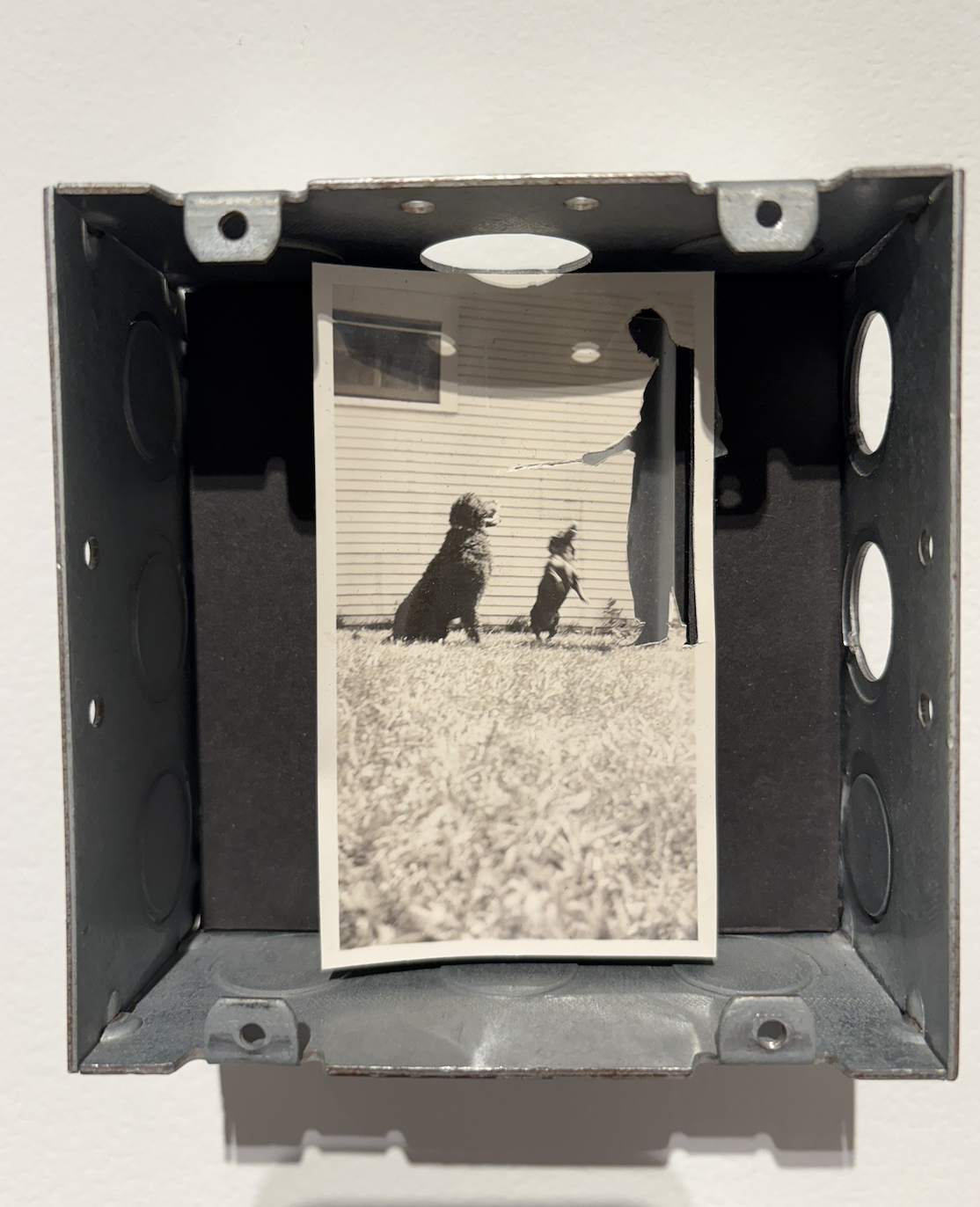
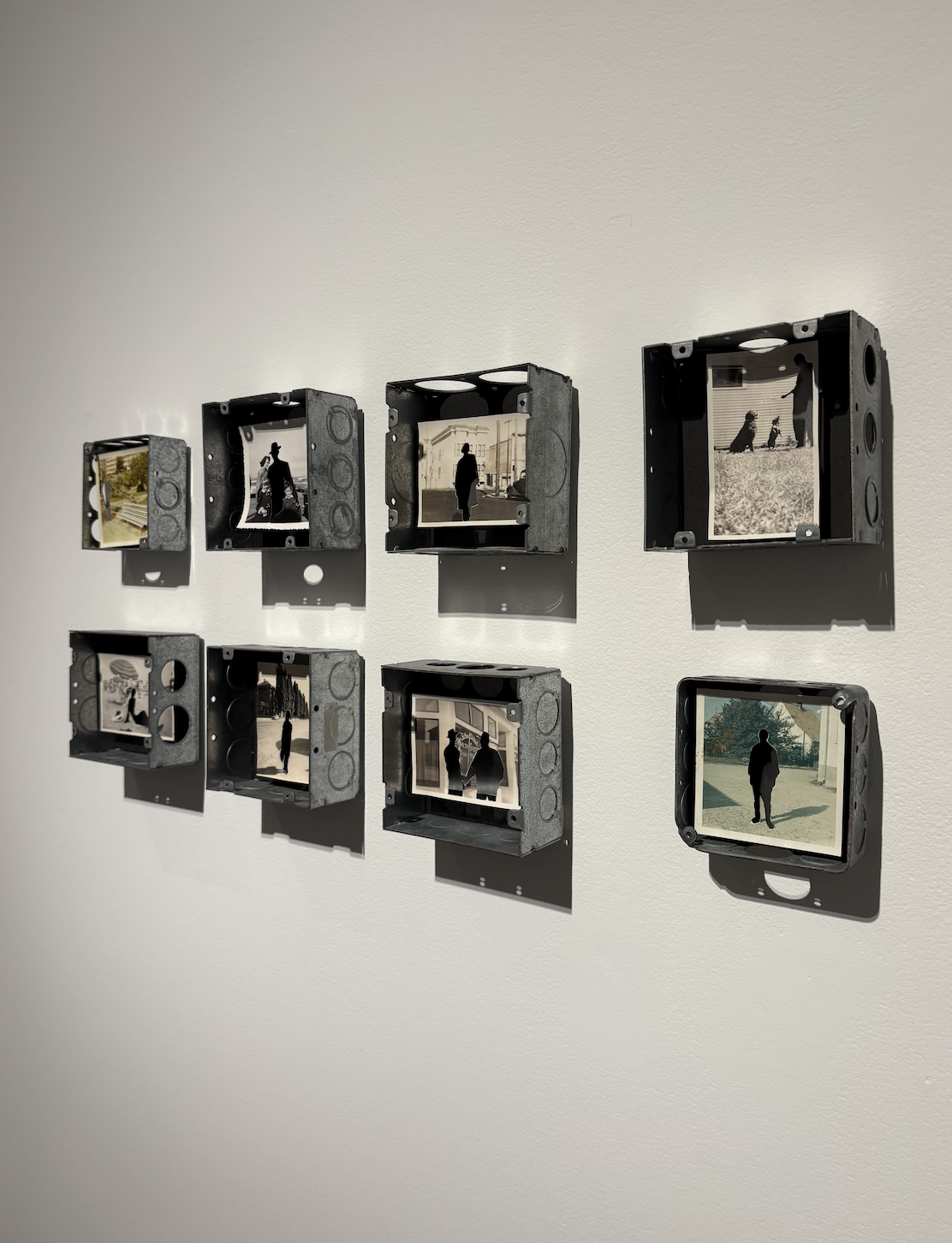
All photos above taken in the Syracuse University Art Museum by Maggie DiPatri
I spent the majority of my time looking closely at the photos, wondering who the people were. What were their stories? How would the people in their lives feel if they knew they were preserved like this? I thought about how nice it might feel to see a familiar background in one of these, a family memento long discarded and forgotten, now given new life. While looking, I wondered how the artist chose which box to store each photo in. And what came first, the photos or the boxes? The holes in each box created a unique silhouette of the cutout visible on the black matte background in the box, almost as if the person who was cut out was standing behind the cutout, peeking out. How much of that was intentional? Were the cutouts and images representative of all the items the artist found at the dump for this piece, or was it a more curated selection of a larger pile of “trash” ?
This work functions as an archive in that it preserves the experiences of the people in the photos. However, it doesn’t preserve their individual experiences—they are quite literally cut out of the photos. To me, it instead preserves the collective experience of a time and place that is, frankly, impossible to know from simply looking at the photos. But I would guess that many people can look into these photos and feel a connection. Maybe one of them evokes a memory, or simply serves as a reminder that we are all having our own unique experiences that will, one day, be forgotten. It’s this sentiment that inspired the work in the first place. But I think the cutouts can be understood as archiving that collective experience. It’s impossible to keep every experience in the archive, of course, and thus the pieces as a whole represent a repertoire that is impossible for the archive to ever fully preserve.
Viewing the pieces and being reminded of the fragility of life (Sansing’s intent) made me thankful for the physical archives of memories I do have, and also made me mourn the lack of physical archives for other memories. As Gratch and Gratch (2021) explain, “We use media accounting to document our everyday lives, in part, so that others might come to know us and interpret our identity through what we choose to share” (p. 17). While they are speaking in the digital context, I think this can apply to physical media (or lack thereof) as well. I love the photo albums passed down through my family, and I wonder what was left out (intentionally or unintentionally). What will I put in my own albums to pass down? What will make it off the “cloud” and into the archive that future generations see? But also, who will choose what parts of me are preserved? Who will transform a photo of me from the dump? Who am I when I am no longer the one choosing what to share in the archive of myself?
Over the past five days, I’ve thought a lot about the light-framed, shadowy silhouettes behind each cutout. I see them now as the person in the photo peeking through, getting a glimpse at who remembers them, and who doesn’t. Maybe they are looking for someone who recognizes the discarded image. I hope, at least, that they are happy to be part of the archive.
How lucky are we, to get to remember people.
References
Gratch, L. M., & Gratch, A. (2021). Digital performance in everyday life (1st ed.). Routledge. https://doi.org/10.4324/9780429439872
